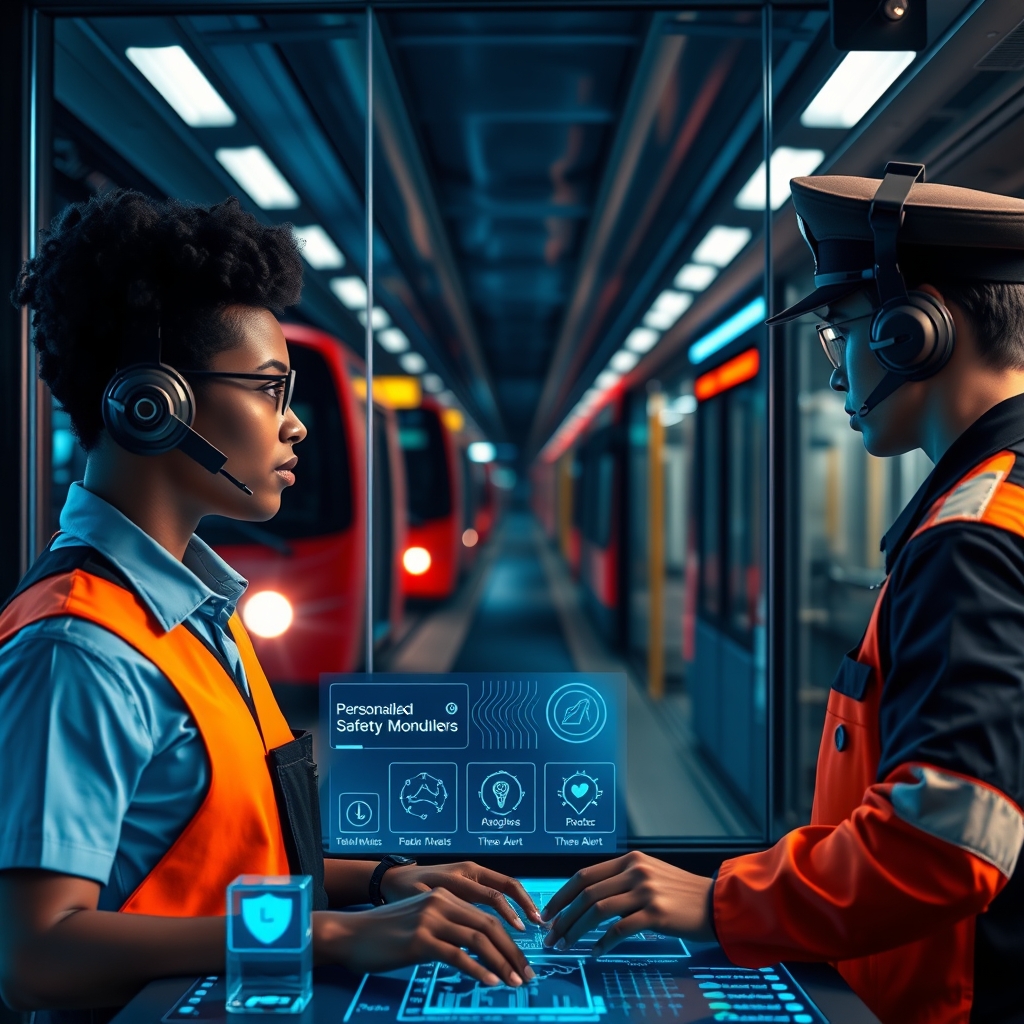

The New Digital Battlefield
It’s 3:47 a.m. Somewhere in a darkened operations center, a security analyst stares at a cascade of alerts—27,000 of them, generated in the past hour alone. Across hidden servers, a botnet is executing 800,000 login attempts per minute against financial institutions on three continents. In a separate vector, a phishing campaign assembled in flawless, idiomatic Portuguese is landing in the inboxes of a Brazilian energy company’s finance team. No single human wrote those emails. No single human is directing the attack infrastructure. It adapts. It learns.
This is not a movie of the near future. It is the current operational tempo of global cyber conflict.
The uncomfortable truth: cybersecurity has outgrown the human nervous system. The speed, scale, and cunning of modern attacks outpace even elite security teams working in coordination across time zones. We have crossed into a battlefield where the faster party isn’t just winning—it’s writing the rules.
Into this gap arrives the beginning of a new model: next-generation AI designed not just to analyze, but to reason. And around that capability, an emerging mythology has begun to form—the Claude mythos.
Mythos is not the same as falsehood. In this context, it points toward an AI becoming less of a passive tool and more of an active, interpretive agent in security operations. The mythos is a shared story of potential—but it’s also a story the industry must test. This article decodes that narrative in three stages.
First, we’ll clarify what the Claude mythos really represents, stripping away the marketing and the speculation. Second, we’ll examine the new shape of the confrontation: how AI-driven threats and AI-driven defenses are clashing in real time, in real networks. Third, we’ll ground the conversation in the hard edges of strategy: where these systems fail, where ethics draws red lines, and how teams can fold these capabilities into leadership rather than letting curiosity steer them into over-automation.
The battlefield has changed. The story has arrived. The decoding begins now.
What the Claude Mythos Really Means
In cybersecurity circles, the “Claude mythos” is less about a product and more about a turning point. It captures the moment when a large language model stopped being seen as a general-purpose text generator and started being imagined as a reasoning partner inside the SOC.
The myth is not that Claude—or any AI assistant—is an autonomous digital guardian. It cannot sniff packets, quarantine endpoints, or detect zero-days on its own. The real shift is more subtle: security teams began using LLMs not just to write reports, but to interpret alerts, correlate scattered evidence, and explain complex attack chains in plain language. That capacity for contextual reasoning is what makes “Claude” shorthand for AI-native defense, not raw automation.
Common misconceptions still blur the picture. One is that the model “knows” your environment. It doesn’t—unless it is connected to your telemetry, playbooks, and threat intel. Another is that its answers are always reliable. In security, a confidently hallucinated IoC can waste hours or cause real damage. The emerging reality is narrower but more useful: modern AI assistants act as an intelligence layer over existing security stacks. They can prioritize alerts, draft incident summaries, suggest hypotheses, and translate machine signals into analyst-ready narratives.
The clearest mental model is this: treat the Claude mythos as a reasoning engine, not a magic shield. It doesn’t replace the SOC, the SIEM, or the human analyst. It amplifies them—speeding up judgment, reducing noise, and helping teams ask better questions under pressure. That is why the mythos matters: it signals a move from tool-centric security to cognition-centric defense.
The Threat Landscape AI Is Now Facing
But before we can appreciate what AI-assisted defense offers, we must understand the adversary it is being asked to confront. The modern threat landscape is shaped less by any single new attack and more by a shift in economics: automation and AI lower the cost, time, and skill required to run campaigns that once demanded significant resources. Three categories illustrate that shift.
AI-generated phishing and social engineering
Attackers now use language models to create personalized, well-written lures at scale. Instead of a single mass email with generic phrasing, a threat actor can scrape a target’s public LinkedIn activity, recent press releases, or vendor relationships and generate a tailored message referencing a real project, colleague, or invoice. These messages read naturally, often in the target’s language, and avoid the grammar errors that once flagged phishing. The result is not just more phishing, but phishing that is harder for both recipients and traditional filters to recognize.
Polymorphic and adaptive malware
AI-assisted tooling can produce malware variants that change their structure while preserving their core function. A credential-stealing loader, for example, might alter code layout, encrypt strings differently, or modify API call patterns with each delivery. These changes do not require new attacker infrastructure; they simply reduce the value of static signatures. Endpoint defenses that rely heavily on known hashes or fixed indicators increasingly miss such variants, shifting detection toward behavioral analysis.
Automated intrusion techniques
Once an initial foothold is established, automated tooling can compress the post-exploitation phase. Rather than manually exploring a network, attackers use scripts that enumerate domain accounts, identify misconfigurations, and attempt privilege escalation across multiple paths in parallel. A phishing click can lead to attempted Kerberoasting, lateral movement, and data staging within minutes. Failed attempts are iterated quickly, with new techniques substituted based on what succeeds. This reduces dwell time and gives defenders a narrower window to detect and respond.
These patterns, observable in incident reports and threat intelligence rather than hypothetical speculation, make the case for AI-native defense not as a luxury but as a necessity. They represent an acceleration of known tactics, not an entirely new threat model—yet that acceleration alone is enough to overwhelm traditional tools. It is against this backdrop that next-generation AI enters the defense.
How Next-Gen AI Is Changing Defense
Next-generation AI is shifting security operations from reactive alert chasing to proactive, context-rich defense. Three areas show the sharpest transformation.
Real-Time Threat Detection and Triage
Traditional SIEMs drowned teams in alerts, with static rules missing subtle attack chains and generating overwhelming false positives. AI-assisted detection ingests massive volumes of telemetry—endpoint events, network traffic, cloud logs, identity signals—and correlates them in real time. Instead of waiting for a known signature, the system continuously scores risk and surfaces only the highest-fidelity incidents.
A modern security team might use this capability to detect a low-and-slow credential stuffing attempt across hundreds of login endpoints that never triggers a single brute-force rule. The AI recognizes the distributed pattern, enriches it with threat intelligence, and escalates a prioritized case—cutting triage time from hours to minutes.
Behavioral Analysis Beyond Static Signatures
Legacy defenses relied on known indicators: file hashes, IP blacklists, and fixed regex patterns. AI-driven behavioral analysis learns normal activity for every user, device, and application. It detects deviations—unusual access timing, abnormal data movement, or unexpected privilege escalation—even when no known malware is present.
For example, an employee account suddenly downloading large volumes of source code at 2 a.m. from an unrecognized location would trigger a behavioral signal, even if the activity uses legitimate tools and no malicious signature exists. This allows security teams to catch insider threats and novel attacks that signature-based tools would miss entirely.
Automated Incident Response with Dynamic Playbooks
Traditional playbooks were rigid, requiring manual steps and static if-then rules. AI-assisted response adapts in real time. When a threat is confirmed, the system can isolate an affected endpoint, block command-and-control domains, and generate a plain-language summary—all in seconds. It learns from each incident, adjusting playbook steps based on what worked previously and in the current context.
A team facing a fast-moving ransomware attempt could automatically quarantine affected systems before encryption spreads, preserving forensic evidence while containment runs. This reduces mean time to respond from hours to moments, allowing defenders to operate at machine speed while retaining human oversight for critical decisions.
Claude-Style Reasoning in the Security Operations Center
In day-to-day SOC work, Claude-style reasoning acts less like a chatbot and more like a tireless analyst assistant. Three workflows make the shift tangible.
Natural language investigation and reporting. Instead of greeting raw logs, an analyst can ask for a summary of all EDR and firewall alerts affecting a specific application over the last 24 hours. The AI returns a readable incident summary, a technical appendix with affected hosts and likely attack paths, and an executive brief for leadership. The same underlying data gets translated for different audiences without extra manual work.
Context-aware alert prioritization. A generic severity score often misses what matters. Claude-style reasoning weighs asset criticality, business impact, and current threat intelligence. For example, suspicious PowerShell on a domain controller should outrank a phishing email sent to a low-privilege marketing account, even if the email has a higher vendor severity rating. The AI explains its ranking and cites evidence, so the analyst can quickly challenge or accept it.
Collaborative human-AI workflows. The AI drafts incident timelines, suggests containment steps, and tracks outstanding actions while the human investigates the case. It might propose isolating a host; the human decides whether that is acceptable during production hours or whether a less disruptive response should be tried first.
Humans remain irreplaceable in judging business risk, recognizing novel attack patterns the model has not seen, confirming whether an alert reflects a real incident or an unusual but legitimate change, and accepting responsibility for response decisions.
The AI Arms Race: Offense vs. Defense
The emerging contest is not simply human versus machine; it is machine against machine, neither process owning the high ground outright, with security teams caught in the loop.
Speed is the first axis. Offensive AI can draft convincing phishing emails, mutate payloads, and probe for vulnerabilities in seconds. Defensive AI counters by triaging alerts, correlating signals, and containing threats in near real time. But speed cuts both ways: attackers can iterate faster, while defenders can respond before a human even opens an alert.
Scale follows. Attackers use generative models to spin up thousands of tailored lures or scan millions of endpoints. Defenders use similar capabilities to simulate attacks, generate detection rules, and analyze vast telemetry. The result is a volume war where signal exhaustion becomes a shared problem.
Deception is the most human axis. AI-powered attacks now clone voices, imitate trusted colleagues, and craft context-aware social engineering. Defensive AI can deploy decoys, alter attack surfaces, and predict adversary behavior. Each side learns from the other’s patterns.
When AI-driven offense meets AI-driven defense, the result is rarely a clean win. It is escalation. Over-automation is the real danger: defensive systems may quarantine critical assets or block legitimate users after a false positive, while attackers may lose control of autonomous tools that spread beyond intended targets. Neither side holds a permanent structural advantage; advantage shifts with data, models, and feedback loops.
For security leaders, the message is not to pick a side but to manage the pace. Invest in calibrated automation, human override mechanisms, and continuous AI red-team exercises. The goal is not to out-automate the adversary blindly, but to make AI-assisted decisions reversible, auditable, and resilient under pressure.
Challenges, Limits, and Ethical Red Lines
The promise of AI in cybersecurity is immense, but responsible deployment requires clear-eyed recognition of its limits. Three challenges demand particular attention.
The Problem of Confident Wrong Answers
Large language models sometimes produce hallucinations—plausible but fabricated information. In a SOC, this isn't just embarrassing; it's dangerous. Imagine an analyst querying an AI assistant about a suspicious IP address and receiving a confident narrative connecting it to a known APT threat group—except that connection never existed. The analyst escalates to a customer, triggering an unnecessary incident response, burning trust, and wasting hours.
Safeguard: Treat AI output as a lead hypothesis, not a conclusion. Require citations to raw logs or threat sources. Apply a verification check before AI-generated findings enter incident response workflows. Some organizations now require any AI-suggested IoC to be independently confirmed by a second source before use in blocking rules.
Privacy and External Data Handling
Security telemetry includes PII, credentials, source code paths, and business-critical context. Sending this data to external AI systems raises serious concerns about retention, model training, cross-tenant leakage, and jurisdiction. If SaaS data is processed by a model outside your compliance boundary, you have created a new attack surface.
Scenario: Your SIEM forwards an alert containing a customer's full name, IP, and session token to an external AI for summarization. That data could be logged by the provider, used for fine-tuning, or blocked by regulators.
Safeguards: Anonymize and redact before sending. Use private or self-hosted models where possible. Define explicit data classification policies: what can leave the perimeter, what cannot, and for what stated purpose.
Keeping Meaningful Human Oversight
AI can triage, correlate, and suggest. But "autonomous response" remains a dangerous ideal. Automated containment built by an AI that misread a false positive could kill business-critical systems.
Scenario: An AI incorrectly deduces a database server is exfiltrating data and triggers a containment script that blocks the IP. Operational harm follows immediately.
Safeguards: Define escalating autonomy levels. The AI may suggest, draft, or execute only low-risk actions (e.g., quarantine endpoint) without sign-off. For irreversible actions—credential rotation, network isolation, data destruction—require human approval. Audit every AI decision with an immutable log. Keep escalation paths explicit: who approves what, within which time window, under which conditions.
AI must support human judgment, not replace it.
The Road Ahead: From Reactive Security to Predictive Resilience
The next shift in cybersecurity will not be defined by faster response alone, but by the ability to anticipate and absorb threats before they fully materialize. That is the promise of predictive resilience—and it becomes possible only when next-gen AI reasoning is paired with human judgment.
AI-augmented security teams will look different from today’s SOC. Analysts will spend less time manually triaging alerts and more time interpreting AI-generated hypotheses, conducting threat hunts, and validating high-context decisions. Engineers will manage AI model performance, data pipelines, and feedback curricula, while security leaders will own risk communication and response governance. New skills—prompt engineering, model evaluation, data provenance, and explainability—will become as critical as reverse engineering or log analysis.
Operating models will change accordingly. Instead of queuing tickets, teams will run continuous detection experiments, tuning models against evolving adversary behavior. Incident response will become a collaboration between human decision-makers and AI systems that draft playbooks, simulate outcomes, and compress investigation time from hours to minutes.
The “Claude mythos” is not about magic. It is a practical framework built on three pillars: detection speed, decision quality, and human-AI collaboration. Detection speed means reducing mean time to identify across hybrid infrastructure. Decision quality means confidence-weighted escalation, not alert volume. Human-AI collaboration means shared context, clear explanations, and accountable action.
The cyber battlefield will not be won by faster alerts or more automation alone. It will be won by teams that blend machine-scale pattern recognition with human intuition and ethical discipline—turning prediction into preparation, and preparation into resilience.
Share article
Daniel Mercer
Senior Cybersecurity Analyst
Daniel Mercer is a Senior Cybersecurity Analyst with extensive experience in evaluating and improving security training programs. He focuses on identifying gaps in employee knowledge and developing targeted solutions to enhance organizational resilience.
View author profile ↗