NIST CSF 2.0 and Security Awareness: Mapping Human Risk Controls to Audit Evidence

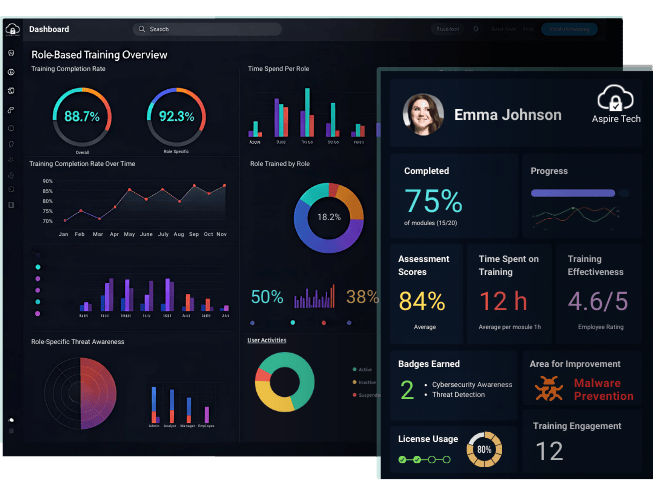
Table of Contents
NIST’s Cybersecurity Framework (CSF) 2.0 elevated Govern and clarified how organizations manage cyber risk—including people. Security awareness is not a checkbox course; it is how you prove that human risk controls operate across Protect and Detect.
General educational mapping as of 2026—not a certification or legal opinion. Align with your assessor and the current NIST CSF text.
Where awareness sits in CSF 2.0
- Govern (GV) — Policies, roles, and risk appetite for human-risk programs; board-level reporting on phishing trends.
- Protect (PR) — Awareness and training so staff can recognize social engineering and follow secure procedures.
- Detect (DE) — Reporting culture and telemetry from simulations that surface weak spots before real incidents.
Evidence auditors typically request
- Documented awareness policy and assigned owners
- Role-based curricula (not one generic deck for everyone)
- Completion + engagement records with timestamps
- Phishing simulation results (click, report, repeat-offender trends)
- Remediation: follow-up training for failures
Aspire Tech’s compliance-oriented reporting is designed to support this evidence trail—see security awareness training and industry mappings in training requirements by industry.
Industry overlays
CSF is a foundation; regulated sectors still map to HIPAA, PCI DSS, GLBA, FERPA, or FISMA-oriented controls. Pair this article with your vertical requirements and role-based paths on role-based training.
Implementation checklist
- Define human-risk KPIs (report rate, time-to-report, repeat click rate)
- Run continuous—not annual-only—simulations
- Store exportable reports for audit windows
- Escalate chronic failures into coaching, not only punitive measures
Ready to operationalize CSF-aligned awareness? Request a demo or compare plans on pricing.
Frequently Asked Questions
CSF 2.0 expects organizations to manage cyber risk including people-focused outcomes under Govern and Protect. Awareness and training are standard ways to demonstrate that staff can recognize social engineering and follow secure procedures.
Stay Updated
Get the latest cybersecurity insights delivered to your inbox.

Related Articles