AI Deepfake Phishing in 2026: Voice Clones, Video Fraud, and What Training Must Cover

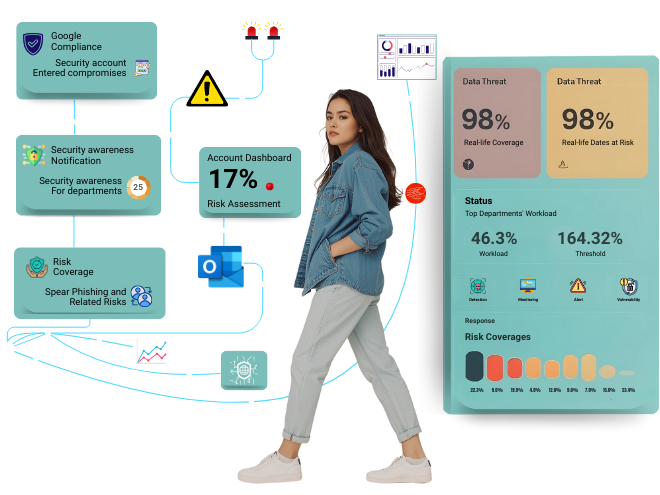
Table of Contents
Phishing is no longer just a suspicious link in an inbox. In 2026, attackers use AI voice cloning (vishing) and deepfake video to impersonate executives, vendors, and help-desk staff with unsettling realism. Traditional annual slide decks rarely prepare employees for a live call that sounds exactly like their CFO.
Educational overview for security and compliance leaders—not legal advice.
What changed in the attacker playbook
Generative AI lowered the cost of personalized social engineering. A short voice sample from a podcast, earnings call, or social video can be enough to synthesize a convincing clone. Deepfake clips can request wire transfers, password resets, or “urgent” vendor payments. These campaigns often combine channels: email priming, then a phone or video follow-up.
Why classic awareness training falls short
- Email-only simulations ignore SMS, voice, and video vectors.
- Static content does not rehearse high-pressure identity verification.
- Completion metrics hide whether people actually pause and verify.
Programs that only measure quiz scores miss the behaviors that stop deepfake fraud: out-of-band verification, dual control for payments, and reporting suspicious calls.
What to train for (practical controls)
- Verification rituals — Never change payment details or share MFA codes based on a call alone; confirm via a known-good channel.
- Deepfake tells + process over instinct — Teach process first; visual/audio “tells” alone are unreliable as fakes improve.
- Multi-channel simulations — Practice email, smishing, vishing, and deepfake scenarios with phishing simulation and micro-training at the moment of failure.
- Role-based paths — Finance, executives, and help desk need different drills; see role-based training.
How Aspire Tech approaches emerging tactics
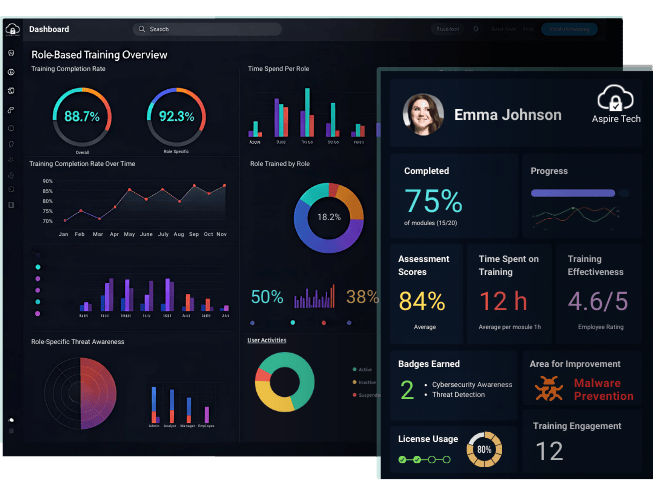
Aspire Security Awareness Training pairs adaptive learning with AI-generated simulations across email, SMS, voice, and deepfake-style scenarios, plus risk scoring and compliance-ready reporting. Explore the security awareness platform and phishing awareness training.
Next steps for security leaders
Update your 2026 awareness roadmap: add voice/video scenarios, require dual control for payment changes, and measure report rates—not only click rates. Book a demo or start a 30-day trial to see multi-channel simulation in action.
Frequently Asked Questions
AI deepfake phishing uses synthetic voice or video to impersonate trusted people—often executives or vendors—to trick employees into transferring money, sharing credentials, or bypassing security checks.
Stay Updated
Get the latest cybersecurity insights delivered to your inbox.

Related Articles